


More Homes, More Choices: Are Home Prices Dropping as Inventory Rises?
Across two very different real estate markets, agents are noticing the same shift.
Marcelino Romero, serving Orem, Provo, and surrounding Utah County communities; Kelly Denney, serving Salt Lake County and Utah County; and Rowena Patton, serving Asheville and Western North Carolina, recently compared what they are seeing on the ground.
Although Utah and North Carolina are very different markets, the pattern is remarkably similar: more listings, rapid new-home construction, aggressive builder incentives, and resale sellers struggling to compete.
Does that mean home prices are about to fall? Not necessarily. But it does mean buyers have more negotiating power, and sellers need a stronger strategy than simply placing a home on the market and waiting.
Year over Year growth rate 2026 (hit the contact button for your zip code as these can be very different to the State number). Source: Reventure app

New Construction Is Changing the Utah and North Carolina Markets - Are Home Prices Dropping?
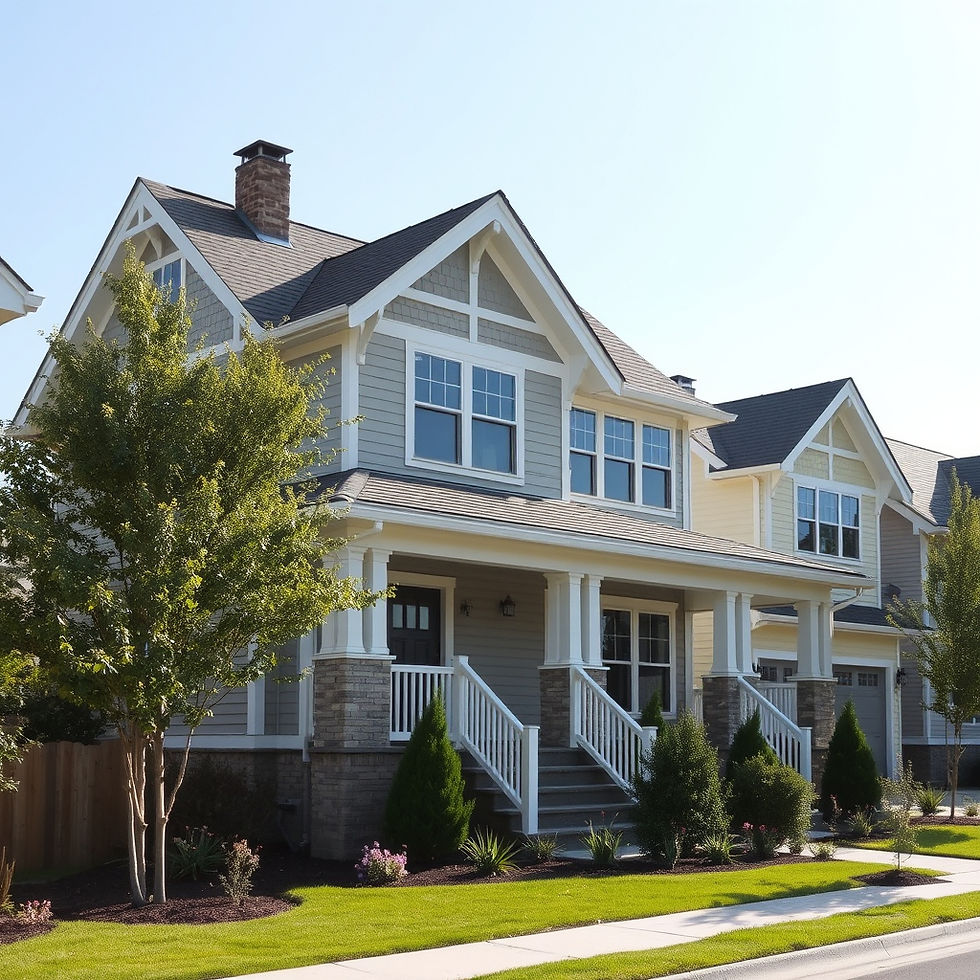
In Saratoga Springs, Utah, new construction has expanded dramatically over approximately the past 15 years. National builders, local builders, boutique companies, and custom builders are all active in the area.
That construction gives buyers choices. It also creates intense competition for owners trying to sell existing homes.
“Some people bought or built when prices were at their highest,” said Marcelino Romero. “Now, the price they need just to break even may be close to the price of a brand-new home in a community with new amenities.”
Many buyers naturally find new construction appealing. No one has lived in the home, the finishes are current, and major systems are new. When builders add financing incentives or closing-cost assistance, an existing home at a similar price can be difficult to sell. This can lead to existing home prices dropping, which we are seeing plenty of evidence of in many states.
That does not always mean the resale home is overpriced in the traditional sense. It may mean the builder is temporarily creating a financial advantage that an individual homeowner cannot easily match.
The result can be a growing number of resale listings that sit on the market while sellers wait for the equity they expected based on conditions from several years ago.
Builders Have More Room to Offer Incentives
Kelly Denney is seeing the same dynamic across Salt Lake County and Utah County.
Builders need to move completed homes and reduce the amount of inventory sitting on their books. To accomplish that, they may be willing to reduce their profit or offer incentives through preferred lenders.
Those incentives can include:
Contributions toward closing costs
Temporary interest-rate buydowns
Permanent fixed-rate financing incentives
Design or appliance allowances
Funds toward upgrades
Assistance with other buyer expenses
A temporary 3-2-1 buydown can make a buyer’s initial payment considerably lower. However, buyers need to understand the permanent payment before committing. With a typical 3-2-1 buydown, the effective interest rate and payment rise annually for three years, reaching the full note rate in the fourth year.
A temporary buydown can be valuable, especially when a buyer expects income to increase or hopes to refinance later. But refinancing is never guaranteed. Buyers should be comfortable with the full future payment from the beginning.
Some builders are also able to offer below-market fixed-rate mortgages through affiliated or preferred lenders. Those fixed-rate programs may be even harder for individual homeowners to compete against.
“Builders and their lenders may be willing to give up more money to move their inventory,” Kelley explained. “The existing homeowner may not have enough equity to offer the same concessions, however by listing CPO we can overcome many of the issues, and allow that existing home to compete more aptly with new homes.”
Western North Carolina Is Experiencing It Too
Here in Asheville and Western North Carolina, we are seeing a similar change.
Large-scale home builders began entering our market in earnest approximately five years ago. Before that, it was unusual to see hundreds of homes constructed at one time within a single community.
Now, thousands of new homes have been added across the region.
In some locations, buyers can find a brand-new four- or five-bedroom home for around $500,000. That may be common in some parts of the country, but it is a relatively new phenomenon in Western North Carolina.
These communities are generally being developed in areas where land was less expensive and large parcels were available. Their arrival has created a new level of competition for previously loved homes.
A resale owner may be offering a well-built home in an established neighborhood with mature trees, more character, and possibly a larger lot. But if a buyer can purchase a brand-new home for a similar price and receive substantial builder incentives, the resale home must be positioned carefully.
Is Greater Listing Saturation Affecting Prices?
An increase in available listings does not automatically cause prices to collapse. Real estate remains highly local, and conditions can vary from one neighborhood and price range to the next.
However, greater inventory usually affects at least one of three things:
Time on the market: Homes may take longer to sell.
Negotiating power: Buyers may request price reductions, repairs, closing costs, or financing concessions.
Final sale price: Homes that are not positioned competitively may eventually sell for less than the seller originally expected. Explore the CPO or Certified Pre-Owned approach.
In some cases, prices do not immediately decline because sellers resist reducing them. Instead, listings accumulate and remain on the market longer. This creates a stale market before the pricing data fully reflects the change.
The Advantages of Buying in a Buyer’s Market
When inventory rises faster than buyer demand, buyers may benefit in several ways.
More choices
Buyers can compare neighborhoods, floor plans, condition, amenities, lot sizes, and financing packages without feeling forced to make an immediate decision.
More negotiating room
A buyer may be able to negotiate the price, closing costs, repairs, appliances, a home warranty, or an interest-rate buydown.
Less pressure
Buyers may have more time to review disclosures, complete inspections, compare financing, and make a thoughtful decision.
Opportunities among stale listings
A home that has been on the market for an extended period may have a more motivated seller, particularly if the owner needs to relocate or has already purchased another property.
Competition between builders and resale sellers
When builders and individual sellers compete for the same buyers, both may become more flexible.
The Possible Disadvantages for Buyers
A buyer’s market still requires careful judgment.
Builder incentives can be complicated
An attractive advertised payment may depend on a temporary buydown, a preferred lender, a larger down payment, or specific qualification requirements.
The lowest initial payment may not be the best long-term value
Buyers should compare the full cost of financing, not just the first-year payment or headline interest rate.
New communities may involve future construction
Buyers could live with construction traffic, noise, dust, and unfinished amenities for several years.
New homes may have smaller lots or additional costs
A new home may include less land, higher homeowners association fees, upgrade charges, or expenses for blinds, fencing, landscaping, and appliances.
Waiting for a dramatic price drop may backfire
Prices and mortgage rates do not always move together. A lower future price may not produce a lower monthly payment if interest rates rise.
The Advantages of Buying a Resale Home
A previously owned home can offer benefits that new construction cannot always match:
An established neighborhood
Mature landscaping and trees
A larger or more private lot
Completed window coverings, fencing, and landscaping
A known property-tax history
Immediate availability
Greater architectural character
More information about how the home and neighborhood perform over time
The key is reducing the uncertainty buyers sometimes associate with an existing home.
Helping Previously Loved Homes Compete
At AllstarPowerhouse, we use a Certified Pre-Owned approach to help resale homes compete more effectively with new construction.
It is similar to the idea behind a certified pre-owned vehicle. We take a previously loved home and provide buyers with more information, preparation, and reassurance.
Depending on the property and program, the process can include:
A full market value offer, where applicable
A professional inspection
An appraisal or professional valuation (optional)
A home warranty (optional)
Advance preparation for condition-related concerns
Access to lender programs that may provide buyer incentives
Clear comparisons of the buyer’s available options
A resale seller may not have a national builder’s marketing budget, but the home can still be presented as a prepared, evaluated, and compelling alternative.
AllstarPowerhouse also represents buyers purchasing new construction. Rowena recently helped a veteran close on a new home with a $12,000 incentive.
Approximately $10,000 of that was available regardless of veteran status.
Builder incentives can be tremendously valuable. The important thing is to compare the entire transaction, including the price, permanent mortgage payment, location, lot, upgrades, future costs, condition, and resale potential.
What Sellers Need to Understand
The price a seller wants, the amount the seller needs, and the price the current market will support can be three different numbers.
Today’s buyers are comparing resale homes not only with neighboring listings, but also with brand-new homes and builder financing packages. Sellers must account for that competition from the beginning.
That may mean:
Pricing accurately at launch
Completing repairs or updates before listing
Offering a home warranty
Providing inspection information
Improving presentation and photography
Considering closing-cost or financing incentives
Making a meaningful price adjustment before the listing becomes stale
A home does not have to be new to compete. It does, however, need to offer a clear and convincing value.
The Bottom Line
From Utah County and Salt Lake County to Asheville and Western North Carolina, rising inventory and rapid new construction are changing the conversation.
Buyers have more choices and more leverage. Builders are using substantial incentives to move inventory. Resale sellers who bought near the top of the market may have less flexibility, particularly if they have not had enough time to build additional equity.
This is not simply a story about falling prices. It is a story about competition.
For buyers, the opportunity lies in carefully comparing new construction and previously owned homes, including the long-term cost of any financing incentive.
For sellers, success depends on understanding what buyers can purchase elsewhere and positioning the home accordingly.
Previously loved homes still have enormous advantages. With the right preparation, pricing, financing options, and Certified Pre-Owned strategy, they can compete successfully, even in a market saturated with new listings.
The Pros and Cons
For Buyers
Pros
More homes to choose from
Less pressure to make an immediate offer
Greater ability to negotiate the price and terms
Possible seller-paid closing costs or repairs
Access to builder incentives and interest-rate buydowns
More time to complete inspections and compare properties
Opportunities to negotiate on listings that have been sitting on the market
Ability to compare new construction with established homes
Cons
Builder incentives may require using a preferred lender
An advertised low rate may be temporary rather than fixed
Monthly payments can increase when a temporary buydown ends
New construction may involve smaller lots, ongoing construction, or unfinished amenities
Upgrades, landscaping, fencing, blinds, and appliances may cost extra
Too many choices can make decision-making more difficult
Waiting for prices to fall further could be offset by higher interest rates
A lower purchase price does not always mean a lower total monthly payment
For Sellers
Pros
Well-prepared resale homes can stand out from competing listings
Established neighborhoods, larger lots, and mature landscaping may appeal to buyers
A Certified Pre-Owned approach can give buyers greater confidence
Inspections, appraisals, warranties, and lender programs can strengthen the offering
Sellers may be able to compete through financing incentives rather than price alone
Correctly priced homes can attract buyers who are frustrated by new-construction costs or timelines
Cons
More listings mean more competition for each buyer
Builders may offer incentives that individual homeowners cannot easily match
Homes may take longer to sell
Buyers may expect price reductions, repairs, or closing-cost assistance
Sellers who bought near the top of the market may have limited equity
Overpricing can cause a listing to become stale
A resale home may need repairs, updates, staging, or stronger marketing to compete - check out the CPO approach, which also includes the possibility of a full market offer.
The price a seller needs may be higher than the price today’s market will support
Need more info? Click on the CONTACT button top right. For more balanced breakdowns that help you evaluate both sides of important decisions, comment below to add your voice, and to see other topics, visit TheProsAndConsProject.com.


It's important to you have an agent that understands the variety of options and avenues. Whether you're a buyer or seller because it's a difficult market and knowing those options helps agents direct their clients the best decision they can make! In the Salt Lake and surroundings counties contact me at 801-577-3946
I was surprised during our conversation this morning by how similar our stories were about new-home construction in the West and the East! Whether you’re selling a newly built home or an existing home, today’s changing market can feel challenging. The right pricing, positioning, and marketing strategy can help your home stand out and compete. Click the contact button if you'd like maps for YOUR zip code - and JOIN IN the conversation here and tell us what YOU think!