


Meth Residue Can Hide in Any Home: Why Buyers, Sellers, and Agents Should Test—Not Guess
Sometimes a house tells you exactly what it needs. A roof stain says, “Please look in the attic.” A musty basement says, “Bring a moisture meter.” And an odd chemical odor near the laundry room says,
“Is that meth—or did Fluffy miss the litter box?”

That question sounds funny until it is your inspection deadline, your buyer’s earnest money, or your seller’s disclosure on the line.
As experienced real estate agents, we have learned to treat possible meth contamination with the same calm, practical mindset we bring to sewer scopes, radon, mold, termites, and roof issues. No panic. No assumptions. No judgment. Just education, testing, disclosure, and the right professionals.
Meth contamination can show up in any neighborhood, from modest starter homes to luxury properties with mountain views and eight-car garages. It does not only happen in homes where meth was manufactured. Contamination can also result from meth being smoked inside the property, and residue can remain on surfaces long after the activity has stopped.
That residue may create concerns for future occupants, buyers, sellers, landlords, and agents. The key is knowing what signs deserve attention and understanding that professional testing is the only reliable way to know.

Meth contamination is not just a “meth lab” issue
Many people hear “meth contamination” and picture a dramatic crime scene or an obvious drug lab. In real estate, the situation is often much quieter.
A home can test positive because meth was smoked inside. Residue from smoke can settle on walls, ceilings, cabinets, HVAC components, flooring, blinds, and other surfaces. Depending on the amount of exposure, ventilation, surface materials, and time passed, contamination may still be detectable later.
That matters because real estate transactions rely on trust and disclosure. Buyers want to know what they are buying. Sellers want to avoid future claims. Agents want to protect everyone involved. Lenders, insurers, property managers, and local authorities may also have requirements or concerns depending on the property and location.
The tricky part is that meth residue is not something you can confidently identify during a normal showing.
A remodeled kitchen does not prove a home is clean. A low price does not mean there is a problem. A high price does not mean there is not. A beautiful neighborhood, fresh paint, luxury finishes, or a well-kept yard cannot confirm anything either.
We have seen enough inspection surprises to know the rule: the house does not have to “look the part” to deserve a closer look.
Real agents are adding meth testing to the conversation
This is not theoretical for many agents. It is showing up in real transactions, in different regions, and across different price points.
Utah agent Kelly Denney routinely orders meth testing as part of his inspection process after encountering positive results over the years. In his Salt Lake City, UT market, a test may cost around $150, including expedited service, though pricing varies by provider, location, turnaround time, and the type of sampling performed.
For many buyers, that can be a reasonable add-on during due diligence, especially compared with the cost and stress of discovering a problem later.

Deanna Allen, who works north of Salt Lake City in the Ogden UT area, has also encountered the issue. Her approach is practical and buyer-focused. When the situation calls for it, she encourages buyers to include testing as part of their inspection plan.
That does not mean every house needs every possible test. It means buyers should have informed options. The inspection period exists so buyers can learn about the property, ask better questions, and make decisions with clearer eyes.
The issue is not limited to Utah. Rowena Patton in Asheville, North Carolina, has also experienced meth-related property concerns. That matters because it shows this is not a one-market conversation. Meth contamination can become part of real estate due diligence anywhere in the country.
The best agents are not using this topic to scare people. They are using it to protect people.
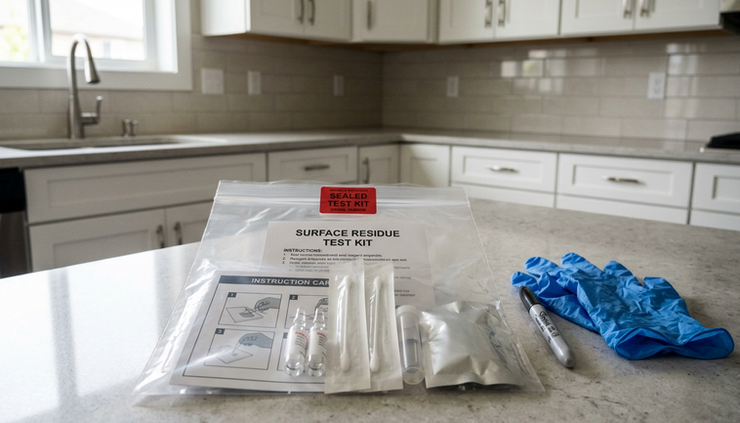
Possible warning signs deserve attention, not assumptions
There are a few things that can raise questions during a showing or inspection. They do not prove contamination, but they may justify a test.
One commonly reported warning sign is an unusual chemical odor. Some people describe it as sharp, solvent-like, ammonia-like, or similar to cat urine.
And yes, that leads to the question every agent wants to ask carefully:
“Is that meth—or did Fluffy miss the litter box?”
Sometimes it really is the cat. Sometimes it is old carpet, pet urine, cleaning products, moisture, stored chemicals, a dirty drain, a garage spill, or a mystery from the previous owner that has nothing to do with meth.
Possible signs that may deserve a closer look include:
Unusual chemical or ammonia-like odors
Strong smells that persist after cleaning or ventilation
Heavy staining on walls, ceilings, or flooring
Strange residue on surfaces
Excessive ventilation modifications
Dead spots in landscaping near sheds or garages
Burn marks, damaged counters, or unexplained chemical containers
A history, rumor, or disclosure that raises concern
Prior law enforcement activity involving the property
Interior surfaces that seem heavily sealed or painted without clear reason
None of those signs confirm meth contamination. They are only clues.
A house can smell odd and test negative. A house can look spotless and test positive. A home can be brand-new to the buyer and still carry a history that is not visible during a 30-minute showing.
That is why visual inspections and noses have limits.
Smell, appearance, price, and neighborhood cannot give the final answer
Real estate has a way of tempting people into snap judgments.
A buyer walks into a distressed property and assumes there must be hidden problems. Another buyer walks into a polished luxury home and assumes everything is fine. Both may be wrong.
Meth contamination does not follow the stereotypes people often attach to it. It can involve:
Owner-occupied homes
Rentals
Short-term rentals
Vacant properties
Recently remodeled homes
High-end properties
Modest homes
Rural properties
Suburban homes
Urban condos
It can also involve people and families facing complicated circumstances. The goal is never to shame an occupant, seller, tenant, or neighborhood. Substance use issues affect real people. Real estate professionals can handle property concerns without turning them into moral judgments.
The property question is simple: Is there residue present above applicable limits or standards?
The answer cannot come from gossip, smell, price, or curb appeal. It comes from testing performed by a qualified provider using proper methods and documentation.
That distinction helps everyone stay grounded. Testing turns fear into information. Information supports disclosure. Disclosure supports better decisions.
What professional meth testing usually involves
Testing procedures vary by state, provider, and purpose. A basic screening may involve collecting samples from surfaces in selected areas of the home. More detailed testing may involve multiple samples, lab analysis, chain-of-custody documentation, or sampling plans designed for regulatory compliance.
For a buyer, the key is to use someone qualified for the type of decision being made. A casual swab may not be enough if the result could affect financing, habitability, remediation, or disclosure.
Before ordering a test, it helps to ask:
Who collects the samples?
Does the provider use a certified or accredited lab where required?
Which rooms or surfaces will be tested?
How are sample locations selected?
What turnaround time is available?
How will the results be reported?
What standards or thresholds apply in this state or locality?
Can the report support next steps if the test is positive?
Costs vary widely. As noted above, Kelly Denny has seen testing around $150 with expedited service in his process, but that is only one example. Pricing depends on the market, provider, urgency, sample count, lab work, and reporting needs.
The best time to discuss testing is usually early in the inspection period, not the night before objections are due. If meth testing
is appropriate, build in enough time for sampling, lab results, review, and negotiation.
What happens if a home tests positive
A positive test does not mean everyone should panic. It means the transaction needs a careful, professional response.
The next steps depend on the level of contamination, local rules, contract terms, and the goals of the buyer and seller. State and local requirements can differ, so qualified guidance matters.
A responsible response often includes these steps:
Obtain qualified environmental guidance
Bring in professionals who understand meth contamination assessment and local rules.
Follow applicable state and local requirements
Some jurisdictions have specific standards, reporting rules, cleanup requirements, or clearance procedures.
Use trained remediation professionals
Meth remediation is not a normal deep clean. The team should know proper containment, cleaning methods, disposal practices, and safety procedures.
Clean or remove affected materials as directed
Depending on the situation, remediation may include cleaning hard surfaces, removing porous materials, addressing HVAC components, or replacing affected finishes.
Complete clearance testing
After cleanup, clearance testing helps confirm whether the property meets applicable requirements before it is considered remediated.
What Can Meth Remediation Cost?
There is no one-size-fits-all price. A more straightforward residential cleanup may cost several thousand dollars, while extensive contamination involving porous materials, HVAC systems, demolition, or reconstruction can reach $15,000 to $30,000 or more.
Testing, permits, disposal, clearance testing, temporary housing, and rebuilding may be charged separately. Because every property and jurisdiction is different, owners should obtain multiple written estimates from qualified remediation professionals and confirm exactly what each proposal includes. For example, Salt Lake County notes that costs vary enormously according to the property and contamination level, reinforcing why a site-specific assessment is essential. Salt Lake County Health Department
For sellers, a positive result can feel discouraging, but hiding from it is rarely the answer. Proper documentation and remediation can help restore buyer confidence and reduce future liability.
For buyers, a positive result does not always mean walking away. Some buyers proceed after negotiated remediation and clearance. Others decide the scope, timeline, or uncertainty does not fit their needs. Both responses can be reasonable.
The point is to make that decision based on facts.

How agents can protect buyers, sellers, and the transaction
Good real estate practice is not about making every issue sound terrifying. It is about building smart systems so surprises do not become disasters.
For buyers, that may mean adding meth testing when there are warning signs, local concerns, or property history that makes the test appropriate. It can also mean talking through inspection timelines and contract options before deadlines get tight.
For sellers, it may mean being proactive before listing. If there is known history, suspected contamination, or uncertainty around a prior tenant or occupant, testing before going on the market can prevent a last-minute crisis. If the home is clean, documentation may help reassure buyers. If there is a problem, the seller can address it before entering a contract.
This is also where Certified Pre-Owned (CPO) home preparation can make a difference. This can be done through our traditional CPO listing, or the CashCPO cash out option. A stronger pre-listing process may include inspections, documentation, repairs, disclosure review, and, when appropriate, environmental testing. Buyers appreciate clarity. Sellers benefit from fewer surprises. Agents can market the home with greater confidence, and CPO homes often sell faster and for more money - and most often bring a huge reduction in stress throughout the transaction, as buyers and sellers are going in what we call 'eyes-wide-open'. This creates a more trusting environment, with a LOT less stress than finding out issues and the scramble that ensues at the last minute. Learn more about Certified Pre-Owned Process.
Simple, responsible habits go a long way:
Discuss optional testing early
Avoid assumptions based on appearance or neighborhood
Put concerns in writing when needed
Recommend qualified inspectors and environmental professionals
Respect privacy and avoid stigmatizing language
Review disclosure obligations carefully
Keep documentation organized
Confirm remediation with clearance testing when required
Real estate is already emotional. Clear information lowers the temperature.
The real takeaway for homeowners and agents
Meth contamination is one of those topics people would rather not think about until they have to. Yet the fix is not fear. The fix is a better process.
A strange smell might be the cat. It might be cleaning chemicals. It might be something else entirely. A beautiful home might be perfectly clean, or it might have a hidden issue. A modest home might raise concerns and test negative. No one can know by guessing.
Professional testing is the reliable path. If a test comes back positive, qualified guidance, proper remediation, and clearance testing create the path forward.
Our team helps buyers and sellers think through inspections, optional testing, disclosure, and Certified Pre-Owned home preparation with a calm, practical approach. If you are preparing to buy, sell, or list a home and want guidance on what to inspect before surprises appear, contact our team. We will help you ask the right questions and protect everyone involved in the transaction.
Ready to Make Your Next Move?
Ready for a full-market offer on your home—or simply want to know what it may be worth? Looking to purchase a home in the USA or elsewhere in the world? Our Allstars and Associates are ready to help you take the next step with confidence.
Get Started with Our Allstars and Associates → This content is informational only and is not legal, environmental, medical, or financial advice. Real estate contracts, disclosure duties, cleanup standards, and health-related concerns should be reviewed with the appropriate licensed professionals.


Comments