


Why We Love Ogden's Historic District
Updated: 1 day ago
Ogden, Utah, has a kind of history people can still walk through. Brick storefronts, old rail-era buildings, tree-lined residential streets, and mountain views all sit close together, giving the historic area a personality that feels both grounded and alive.
For a community spotlight, Ogden’s historic district is easy to love because it offers more than pretty architecture. It has a real sense of place. The area connects Ogden’s past as a railroad town with the everyday comforts people look for now, including local restaurants, walkable blocks, nearby recreation, and homes with character.
That mix is a big part of the draw. People come for the history, then stay interested because the neighborhood still works for modern life.
Want to learn more about Northern Utah or Ogden in particular? Hit the contact button at the top of the page!

Pros and Cons of Living in Ogden, Utah
Ogden combines historic character, mountain access and comparatively attainable housing—but it is not simply a less-expensive version of Salt Lake City. Before moving, buyers should investigate neighborhood differences, commuting, air quality, winter weather and the true cost of maintaining an older home.
Pros of Living in Ogden, Utah
Housing can be more attainable than in Salt Lake City.
Ogden often gives buyers more house, yard or architectural character for their money than neighborhoods closer to Salt Lake City. Prices still vary sharply by location and condition, but the city can provide another entry point into the Wasatch Front market.
Outdoor recreation is remarkably close.
Residents have convenient access to mountain trails, the Ogden and Weber rivers, Pineview Reservoir and the recreation available throughout Ogden Valley. Hiking, biking, climbing, fishing, skiing and snowboarding can become part of regular life.
The city has a personality of its own.
Historic 25th Street, Union Station, rail-era architecture and locally owned businesses give Ogden an identity that newer communities cannot easily reproduce. It feels like an established city rather than an interchangeable suburb.
Its historic neighborhoods contain genuinely distinctive homes.
Buyers can find bungalows, brick cottages, Victorian details, mature trees and traditional front porches. For someone who values craftsmanship and individuality, Ogden offers alternatives to newer subdivisions.
Downtown is compact and enjoyable to explore.
Restaurants, entertainment, events and historic landmarks are concentrated around a walkable central district. Residents can enjoy a night out without dealing with the scale or intensity of a major downtown.
FrontRunner provides a regional connection.
UTA’s commuter rail connects Ogden with communities along the Wasatch Front, including Salt Lake City and Provo. It can be valuable for certain commuters, students and travelers who choose their home and work locations carefully.
Cons of Living in Ogden, Utah
More affordable does not necessarily mean inexpensive.
Ogden’s housing costs have risen, and an attractively priced older home may require significant repairs. Buyers should budget for the entire property—not merely the purchase price or monthly payment.
Historic charm can bring expensive surprises.
Older plumbing, wiring, roofs, foundations, insulation, sewer lines and unreinforced masonry deserve careful investigation. Renovating a designated historic property may also involve additional rules or approvals.
Neighborhood conditions can change quickly from block to block.
Ogden should not be judged by one afternoon on Historic 25th Street—or by a single online statistic. Traffic, property upkeep, noise, redevelopment and access to services can feel very different only a few streets apart.
Public transportation will not replace a car for everyone.
FrontRunner is useful, but its schedule and station locations will not suit every routine. Outside the downtown core, many errands, employment centers and recreational destinations are considerably easier to reach by car.
Winter inversions can affect air quality.
Northern Utah’s valleys can trap pollution during winter weather patterns. Anyone with asthma or other respiratory concerns should monitor local air-quality conditions before deciding to relocate.
Ogden offers fewer big-city options than Salt Lake City.
The city has restaurants, events and local culture, but people wanting extensive nightlife, major entertainment or a larger professional job market may travel south frequently. That commute can become tiresome, particularly during rush hour or winter weather.
Is Ogden, Utah, Right for You?
Ogden may be a strong fit if you want mountain access, historic homes, a recognizable downtown and housing that can be more attainable than Salt Lake City. It may be less suitable if you want extensive big-city amenities, completely car-free living or a newer home requiring little maintenance.
The wisest approach is to investigate the specific property and block. Compare commute times, renovation history, utility systems, parking, noise, transit access and proximity to the places you will actually use.
Now we’d like to hear from the people who know Ogden best. What are the real pros and cons of living here? Comment below and share your experience.
Want more honest, no-fluff comparisons? Explore all Pros and Cons Project topics—and add your voice.
Ogden’s historic character feels authentic
Some historic neighborhoods feel preserved behind glass. Ogden’s historic area feels lived in.
The city grew as a major railroad hub, and that story still shapes the look and feel of the area today. Union Station remains one of the most recognizable landmarks in Ogden, and Historic 25th Street continues to reflect the city’s rail-town roots. The storefronts, upper-story windows, old signage, and compact street grid tell a clear story: this was a place built for movement, trade, and gathering.
That history gives the district a texture that newer areas often cannot copy. Buildings vary in age, materials, and style. Some have ornate details. Others are simple and practical. Together, they create streets that feel layered rather than planned all at once.
People are often drawn to details such as:
Original brick and stonework
Decorative cornices and arched windows
Porches, mature trees, and older sidewalks
Storefronts that sit close to the street
Views of the mountains between buildings
These details matter because they make daily life feel connected to something larger. A walk to coffee, dinner, or a local shop becomes a walk through Ogden’s story.
The appeal is not only visual. Historic places tend to invite curiosity. A building’s shape suggests its former use. A restored facade hints at decades of change. A street name or corner landmark can lead to a conversation. That sense of discovery is one reason people enjoy spending time here, even if they have lived in Ogden for years.
Walkability gives the area everyday appeal
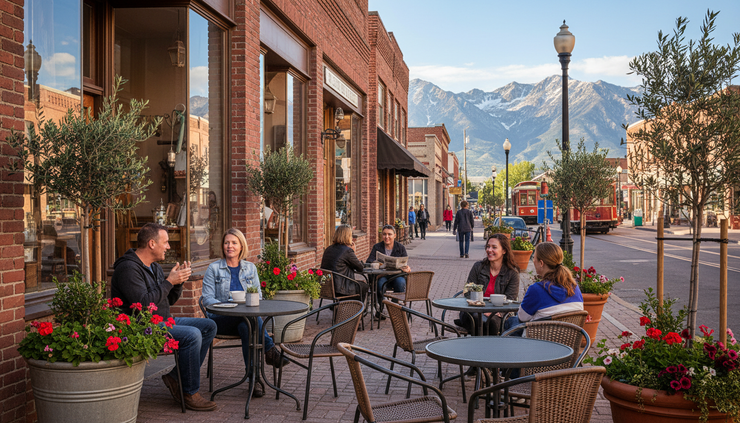
A major reason people love historic districts is simple: they are pleasant to explore on foot. Ogden’s historic core has that advantage.
Historic 25th Street is one of the city’s best-known gathering places, with restaurants, shops, bars, galleries, and entertainment close together. Instead of needing to drive from one stop to the next, people can park once and wander. That changes the pace of a visit. It encourages slow browsing, spontaneous meals, and casual meetups.
The same walkable pattern adds value for people who like a neighborhood with activity nearby. A historic area does not have to be loud or crowded to feel connected. It just needs a good mix of places within reach.
In Ogden, much of the appeal comes from how close different experiences are to each other. A person can spend time downtown, visit a local business, see public art, pass historic buildings, and still be close to residential streets with older homes. The transition from commercial blocks to neighborhood blocks feels natural.
That walkable feeling is one of the historic district’s strongest draws. It helps the area feel social, useful, and welcoming without losing its old-city character.
For real estate, walkability often comes up in conversations because it affects daily routines. People may be looking for a home near restaurants, a neighborhood where weekend errands feel easier, or a place with more personality than a typical subdivision. Ogden’s historic area checks many of those boxes while keeping a distinctly local feel.
The homes have character that newer builds often lack
Ogden’s historic residential areas attract attention for the same reason its commercial buildings do: character.
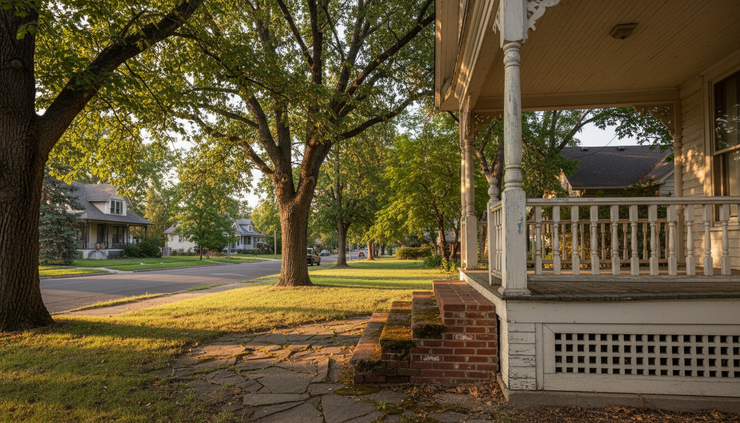
Older homes often have design features that stand out, including covered porches, hardwood floors, built-ins, tall windows, detailed trim, and unique rooflines. Not every historic home has all of those features, and condition can vary widely, but the overall housing stock offers a level of individuality that many buyers notice right away.
The historic area includes a range of home styles and sizes. Depending on the street, someone might find:
Bungalows with welcoming front porches
Victorian-era homes with decorative detail
Brick cottages with compact layouts
Larger older homes with divided living spaces
Restored properties with modern updates
Homes that still need careful renovation
That variety is part of the draw. Some people want a move-in-ready historic home where major updates have already been handled. Others like the idea of restoring a property over time. Some simply want a home that does not look like every other house on the block.
Historic homes do ask for thoughtful ownership. Older roofs, plumbing, electrical systems, foundations, windows, and insulation all deserve careful review. A home’s charm should go hand in hand with good information. Inspections, permit history, and an understanding of maintenance needs matter.
That said, many people feel the tradeoff is worth it. They value craftsmanship, individuality, and a neighborhood setting with mature trees and established streets. A well-cared-for older home can feel warm in a way that is hard to recreate.
For anyone exploring Ogden’s historic district, a local real estate agent can help sort through the practical details. Two homes on the same street may have very different upgrade histories, layouts, and maintenance needs. Local guidance can make the search clearer and less stressful.
Downtown energy and mountain access make a rare combination
Ogden has a strong advantage that helps set its historic area apart: the mountains are always part of the picture.
Many historic districts offer architecture and local businesses. Ogden adds quick access to outdoor recreation. The Wasatch Mountains rise just east of town, and the area is known for nearby trails, skiing, snowboarding, biking, climbing, fishing, and river access. For people who want both city convenience and outdoor options, that combination is hard to ignore.
This balance shapes the culture of the historic area. It is common to see people move between downtown plans and outdoor plans in the same day. Brunch and a trail walk. Shopping and a ski day. Dinner downtown after time in the canyon. The district’s location supports that rhythm.
The area also benefits from Ogden’s broader identity as a practical, outdoors-oriented city. It does not feel like a place built just for visitors. It has local history, local businesses, and local routines. That grounded quality is part of why people find it appealing.
The historic district offers a lifestyle that feels connected on two levels: connected to Ogden’s past and connected to the region’s outdoor setting.
That is a powerful mix for residents, visitors, and potential homebuyers. The neighborhood does not rely on one attraction. It brings together architecture, restaurants, shops, trails, transit history, and mountain views in a compact area.

Local businesses keep the district interesting
A historic district only thrives when people use it. Ogden’s historic area benefits from a steady mix of local businesses that give people reasons to return.
Restaurants and cafes bring activity throughout the day. Shops and galleries make the area more interesting to explore. Seasonal events and community gatherings help create a sense of shared place. Even a simple evening walk feels more engaging when storefront windows are lit and patios have people talking over dinner.
The best historic areas do not freeze the past. They adapt. Ogden’s historic district has done that by allowing old buildings to serve new purposes. A structure that once supported the railroad-era economy might now hold a restaurant, studio, shop, or entertainment space. That kind of reuse gives old buildings a reason to remain part of daily life.
People tend to respond to that authenticity. Chain-heavy commercial areas can feel interchangeable. Historic Ogden feels specific. It belongs to this city and nowhere else.
Local businesses also encourage community habits. People develop favorite lunch spots, coffee stops, date-night restaurants, and weekend routines. Over time, those small habits create attachment. A neighborhood becomes more than a location. It becomes part of how people spend their time.
For homeowners, that can add emotional value to the area. Living near a place with active local businesses often means more chances to connect, explore, and enjoy the city without planning a major outing.
The area appeals to many kinds of buyers and visitors
Ogden’s historic district attracts interest from people with different priorities.
Some focus first on architecture. They want a home with original detail, an older streetscape, or a property with renovation potential. Others care most about location. They want to be near downtown dining, arts, events, and services. Some are drawn by access to the outdoors and appreciate being able to enjoy both city life and mountain recreation.
Visitors often come for similar reasons. Historic 25th Street, Union Station, local restaurants, and nearby trail access make the area a natural stop for anyone exploring Ogden. The neighborhood is easy to understand at street level, which helps people connect with it quickly.
The district also appeals to people who value established neighborhoods. Mature trees, older homes, sidewalks, and long-standing landmarks can help a place feel settled. There is comfort in a neighborhood that has grown over time.
That does not mean every property or block will suit every person. As with any historic area, details matter. Parking, lot size, home condition, noise levels, renovation rules, and proximity to commercial activity can all shape the experience. A lively street may be perfect for one person and too active for another. A fixer-upper may inspire one buyer and overwhelm another.
This is where local knowledge helps. Real estate decisions in historic areas often come down to the fine print of a specific property and its surroundings. A good agent can help compare streets, explain common inspection concerns, and point out questions to ask before making a decision.
Why the historic district continues to stand out
People love Ogden’s historic district because it feels real. It has preserved pieces of the city’s railroad past, but it also has present-day energy. It offers old buildings, local food, walkable streets, mountain access, and homes with personality.
That combination gives the area staying power. Trends change, but places with strong identity tend to remain memorable. Ogden’s historic area has that identity in plain view, from Union Station to the storefronts of Historic 25th Street to the nearby residential blocks with older homes and mature trees.
For anyone curious about living in or near the district, the next step is simple. Look closely, ask good questions, and get local guidance before making a move. Our real estate agents are always ready to answer questions about Ogden neighborhoods, historic homes, and what to expect during the buying or selling process. Click the contact button on the website to start the conversation.
Ogden’s historic district draws people in with beauty, history, and daily convenience. It keeps their attention because it feels like a place with roots, character, and room for the next chapter.


Comments